
Safe and Sound Protocol
reconnect to yourself, others, and live a more centered life
What is the Safe and Sound Protocol?
Are you feeling overwhelmed by chronic stress, sensory overload, or discomfort in your body? Do you struggle with agitation or anxiety that seems to arise without an apparent cause?
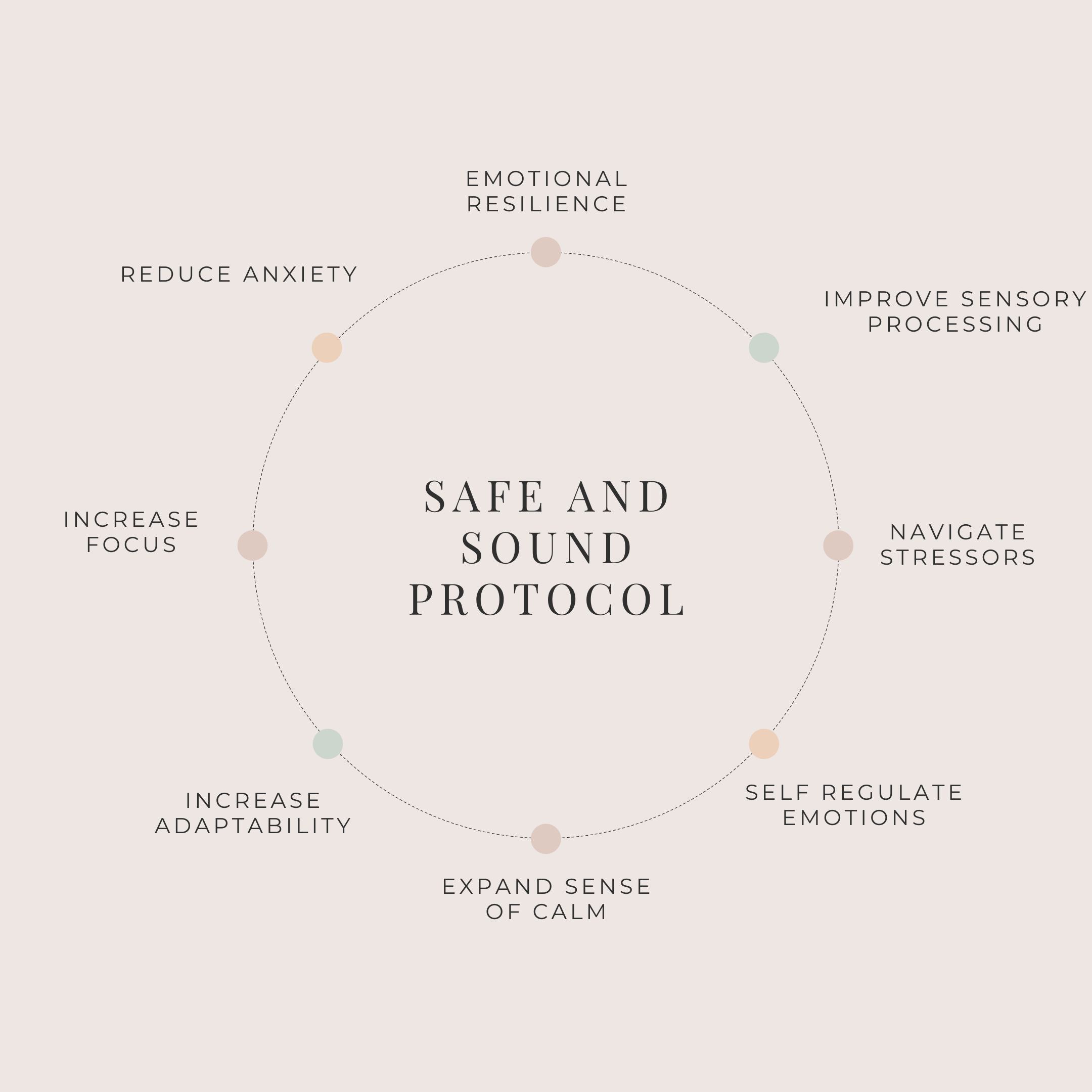
The Safe and Sound Protocol (SSP) is a groundbreaking, science-backed therapy designed to help regulate the nervous system. By shifting the body out of fight, flight, or freeze responses and into a state of rest and digest, SSP promotes a profound sense of calm and safety.
Developed by Dr. Stephen Porges and rooted in Polyvagal Theory, SSP works by using specially curated music to stimulate the vagus nerve and retrain the nervous system to respond more adaptively to stress. Learn more about the science behind the Safe and Sound Protocol here.
Sara Moskowitz, LCSW, SEP, is a Licensed Clinical Social Worker and Somatic Experiencing Practitioner based in Chicago, licensed to provide telehealth services throughout Illinois. She is a certified Unyte-iLs Safe and Sound Protocol (SSP) provider, in addition to her Somatic Experiencing training. With over ten years of experience, Sara has helped clients find ease in their bodies, regulate their nervous systems, and experience relief from the symptoms of trauma and chronic stress.
What is Safe and Sound Protocol Used For?
Your body won’t settle — even when your mind knows there’s no danger.
Maybe it’s a flare that comes out of nowhere, or a sound that suddenly feels unbearable. Maybe it’s a wave of panic with no clear trigger, an exhaustion that doesn’t lift no matter how much you rest. However it shows up for you, the pattern underneath is often the same: your nervous system is reacting like something’s wrong, even when nothing obviously is.
You’ve probably already done real work to understand this. You can track your patterns fluently, maybe even explain the biology behind them. And yet, your body still hasn’t caught up to what your mind already knows.
This is what it looks like when the nervous system gets stuck, and it’s exactly what the Safe and Sound Protocol (SSP) was designed to help with.
SSP works with your neuroception (your nervous system’s often-unconscious read on whether you’re safe) using specially filtered music to gently shift your body out of threat mode. When your body is bracing for danger, it can amplify whatever you’re already struggling with. Over time, many clients find this makes co-regulation (the natural calming that happens when your nervous system settles alongside someone else’s steady presence) easier to access, and helps build resourcing: your internal and external reserves of safety you can draw on when things feel hard.
Who This Work Is For
SSP tends to resonate most with:
- People managing complex medical and chronic conditions like Long COVID, MCAS, EDS/hypermobility, POTS and other dysautonomia, autoimmune conditions who are working to calm an overactive nervous system that may be fueling symptom flares
- Trauma survivors, including medical trauma from years of being dismissed, misdiagnosed, or unheard by providers
- People with anxiety, chronic stress, or a nervous system stuck on overdrive (or shut down entirely)
- Neurodivergent adults and teens — autism, ADHD, or sensory processing differences
- Highly sensitive people, and anyone who’s done real work in talk therapy to understand themselves well yet still finds their body hasn’t caught up to that understanding
Is SSP Right for You?
You might be a good fit if any of this feels familiar:
- Your symptoms flare in response to stress, even stress you thought you’d handled
- You feel hypervigilant toward your own body: constantly scanning for the next flare, crash, or symptom
- You’ve experienced medical trauma or felt dismissed by providers, and it’s left your nervous system on guard
- You understand your condition intellectually, but your body still reacts like nothing’s changed
- You feel drained after ordinary activities, and it takes far longer to recover than it seems like it should
- You feel disconnected from your own body, like it’s become something you have to manage rather than live in
- You’ve done the medical and emotional work, and still feel like your nervous system hasn’t gotten the memo
SSP sessions are designed to fit into your life with no commute required if you’d prefer to do the listening portion from home. Sara offers the Safe and Sound Protocol both in-person in Chicago and via telehealth to clients anywhere in Illinois.
What is a Dysregulated Nervous System?: Understanding Stress and Its Impact
Nervous system dysregulation occurs when your body struggles to shift smoothly between different states of activation and rest. This imbalance can leave you feeling “stuck” in certain patterns:
- Stuck on “ON”: Constantly in overdrive, feeling anxious, hypervigilant, or overwhelmed.
- Stuck on “OFF”: Struggling with low energy, exhaustion, or difficulty finding motivation to get through the day.
When the nervous system is unable to move smoothly between these states, it can impact your physical health, emotional well-being, and relationships. Symptoms like chronic stress, anxiety, or burnout may seem overwhelming to deal with, but regulation is possible.
The Safe and Sound Protocol (SSP) offers a proven approach to help recalibrate the nervous system, making it easier to find balance, resilience, and ease.
Common Signs of Stress
Stress affects everyone differently, but some of the most common signs of stress include:
- Anxiety and heightened panic: Persistent worry or sudden feelings of fear.
- Physical tension: Tightness in areas like the hips, neck, and shoulders.
- Irritability: A shorter temper or heightened sensitivity to triggers.
- Fatigue: Constant exhaustion, even after rest.
- Sensory overwhelm: Feeling overstimulated by noise, lights, or activity.
- Racing thoughts: A mind that feels stuck in overdrive.
- Difficulty focusing: Struggling to concentrate or stay present.
- Insomnia and restlessness: Trouble falling asleep or staying asleep.
When stress goes untreated, it can contribute to more serious health issues over time, including:
- Autoimmune disorders.
- Digestive dysfunction.
- Endocrine imbalances.
- Cardiovascular symptoms.
Recognizing these signs early is key to managing stress effectively and preventing further health complications.
How the Safe and Sound Protocol (SSP) Can Help with Stress
Since stress often manifests physically, creating a connection between the mind and body is essential for healing. The Safe and Sound Protocol (SSP) uses a gentle, music-based approach to support nervous system regulation by:
- Encouraging a state of calm and relaxation.
- Helping the body shift out of fight-or-flight responses.
- Building resilience to stress over time.
Whether you’re experiencing mild stress or navigating the long-term effects of chronic stress, the SSP offers an accessible and effective way to bring balance and ease back to your life.

Frequently Asked Questions
What does the SSP process actually look like?
We’ll start with an assessment. Before any listening begins, we spend real time in your intake session talking through your nervous system’s history: what tends to activate you, what helps you settle, any medical or trauma history that’s relevant, and what you’re hoping this work will support. That conversation will inform how we approach your specific protocol, rather than starting from a blank template.
The listening itself happens through the Unyte app, using a set of over-ear headphones, at home and on your own time. Over your intake session, I train you to recognize your own signals, so pacing isn’t guesswork. Five hours of specially filtered music make up the core listening, but there’s no fixed daily requirement to hit.
Pacing looks different for everyone. Some people move through the listening fairly quickly. Others need to go slowly, with more space between sessions. There’s no standard timeline – together we will figure out what your particular nervous system can absorb well, and adjust from there.
You’re welcome to reach out by email as often as you need while you’re listening to report on how you’re responding.
If activation comes up during listening, that’s considered useful information (not a setback) and helps us pace appropriately. When it happens, you pause, let me know as soon as you can, and we draw upon the plan we created in your intake session to navigate the activation.
We’ll finish with a debrief session, where we talk through what came up, what shifted, and where to go from here.
Do I have to talk about my trauma to do SSP?
No. SSP works with the nervous system directly through listening. It doesn’t require you to narrate or relive difficult experiences. Many clients find it especially helpful because it doesn’t ask this of them.
Will this still work if I struggle with mindfulness, visualization, or "sitting with" my body?
Yes. SSP doesn’t rely on visualization or traditional mindfulness skills. It is a passive listening process, so it works well even if those approaches haven’t clicked for you before.
Is Safe and Sound Protocol covered by insurance?
BCBS PPO plans typically cover the intake and debrief sessions. The listening portion itself (since it’s completed independently, not during a session) is not covered. Total cost depends on your specific plan. Reach out and Sara will walk you through your individual pricing.
How is SSP different from a regular talk therapy session?
SSP is a complementary tool, not a replacement for therapy. It works on nervous system regulation at a physiological level, which can make the insight-based work you do in talk therapy easier to access and sustain. Sara is always happy to provide referrals after SSP sessions to match you with long-term providers.
Can I do SSP remotely?
Yes. Sara is licensed to provide SSP via telehealth throughout Illinois, so you can complete the listening portion from home on your own schedule.
I have a sensory processing difference or am neurodivergent. Is SSP still appropriate?
Very often, yes! SSP was originally developed with sensory sensitivity and auditory processing in mind, and many neurodivergent clients find it a good fit. Sara can talk through your specific sensory profile during your free consult to make sure it’s the right fit before you commit.
What do I need to bring to my sessions?
Not much! You’ll need a set of over the ear headphones to listen to the music. If there’s something you’d like to occupy yourself with as you listen (fidget toys, coloring books, knitting, etc.), those are great too.
Do I need to listen to the 5 hours all at once?
Definitely not! While there are a total of 5 hours worth of therapeutic listening music, most people listen for 30 seconds to 15 minutes at a time. Sara will work with you to determine a length of listening that is tailored to your nervous system and goals.
What is your cancellation policy?
Your time slot is reserved for you and only for you. A $165 cancellation fee applies if your intake session is not cancelled at least 24 hours in advance.
About Somatic Psychotherapy Chicago
Our Philosophy
At Somatic Psychotherapy Chicago, we assess the individual symptoms that you have and decode them to help them run their course. For example, perhaps tension in a specific muscle combined with surges of panic is actually your body communicating that it needed to defend itself in a way that it never got to do yet. Once your body senses that it has effectively used its trauma response, that response will recede. And importantly, if that symptom comes up again, you’ll remember how to deal with it.
An important element of the work at Somatic Psychotherapy Chicago is the emphasis on the unique experience of everyone’s nervous system. There are many ways that a body may express its trauma, and each expression requires a different intervention. Tools like breathing can be helpful for some folks and feel like torture for others. We work together to find a method that is not only pleasant for you, but fits into your lifestyle. For example, a busy mom of toddlers isn’t going to find 30 minutes to meditate, so the tools we’d develop for her would be portable and able to be implemented in the face of tantrums and the day-to-day responsibilities of parenting.
Sessions can always be focused on learning what is going on during a trauma response at a level that works best for you. Whether you’re the “rather not revisit science class” type who prefers your learning to be in metaphor form or you’d like to understand the nitty gritty science behind polyvagal theory, Sara will meet your learning style and adapt the space to your needs.
Meet Sara Moskowitz
Sara Moskowitz is a somatic psychotherapist and the owner of Somatic Psychotherapy Chicago. Her specialties include:
- Pre- and perinatal trauma
- Early developmental trauma
- Transgenerational trauma
- Event trauma
- Medical trauma
- Sexual boundary violation trauma
A lifelong learner and self-proclaimed nerd, Sara has over 400 hours of post-graduate trauma training (and counting). Sara’s advanced training in Somatic Experiencing includes:
- Advanced Strategies for Working with Sexual Trauma and Sexuality with SE Faculty Arielle Giaretto
- Healing Sexual Trauma with SE Founder Peter Levine and Kimberly Ann Johnson, SEP
- It’s Never Too Late: Healing Prebirth and Birth at Any Age with Mia Kalef
- Pre- and Perinatal Trauma Workshop with SE Faculty Raja Selvam
- Relational Development, Rupture and Repair Workshop with SE Faculty Dave Berger and Abi Blakeslee
- Touch Skills Training Level 1 with SE Faculty Kathy Kain
- Jewish Ancestral Healing with Taya Mâ Shere, SEP
Sara is also passionate about psychoeducation, or helping clients understand what exactly is happening in their bodies. Sometimes understanding what is happening can make all of the difference when it comes to feeling intimidated (or not) by seemingly random symptoms. Sara also creates and collects meditations on Insight Timer for those interested in exploring more there.
Feel a connection? Reach out today!